5 Restaurant Marketing Strategies That Actually Work in Dubai (2026)
Marketing a restaurant in Dubai is fundamentally different from marketing in most other cities. The population is transient, with residents and tourists constantly cycling through. Competition is fierce, with new restaurants opening every week. And diners are sophisticated, having been exposed to world-class dining from dozens of cuisines. Generic marketing advice does not work here. What follows are five strategies that Dubai restaurant owners are using right now to drive measurable, sustainable growth in 2026.
1. Cashback Programmes That Create Repeat Customers
The single most effective marketing investment a Dubai restaurant can make in 2026 is a well-structured cashback programme. Here is why: the average cost of acquiring a new restaurant customer through Instagram ads in Dubai is AED 45-80. The average customer visits a restaurant 1.3 times before moving on to something new. That maths does not work for most restaurants.
A cashback programme flips this equation. Instead of paying upfront for uncertain results, you reward customers after they actually spend money at your restaurant. The cashback incentivises them to return, turning a one-time visitor into a regular. Data from Places UAE partner restaurants shows that cashback customers return an average of 3.2 times within 90 days, compared to 1.3 times for non-cashback customers.
The key to making cashback work is setting the right percentage. Most successful restaurants offer 15-30% during regular hours and boost to 30-45% during slow periods. This targeted approach fills seats when you need them most while maintaining healthy margins during peak times.
2. Digital Menus That Sell Before Customers Arrive
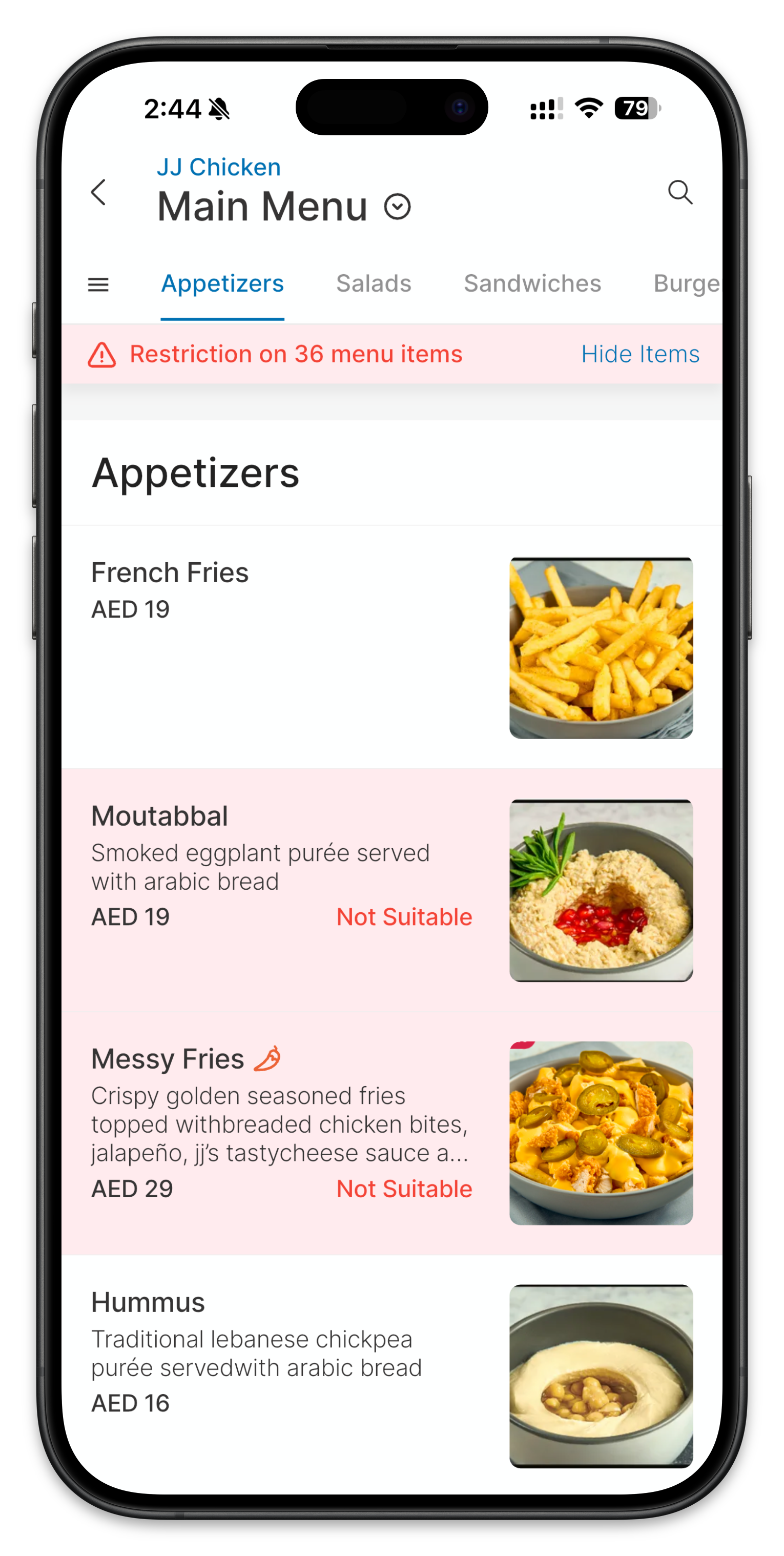
Your menu is your most powerful sales tool, but only if people can see it before they decide where to eat. In 2026, the decision about where to dine is made on a phone, often hours before the actual meal. Restaurants with complete, photo-rich digital menus available on discovery platforms convert browsers to visitors at nearly double the rate of those without.
What makes a digital menu effective for marketing:
- High-quality photos of every dish: Customers eat with their eyes first. Restaurants that add professional photos to their digital menus see a 25-35% increase in click-through rates.
- Accurate, current pricing: Nothing frustrates a potential customer more than arriving to find prices are higher than what they saw online. Keep your digital menu updated in real time.
- Bilingual presentation: Dubai's dining population speaks dozens of languages. At minimum, your menu should be in English and Arabic. Additional languages capture additional customers.
- Dietary filters: Enable customers to filter by dietary requirements. A vegan browsing your menu who can instantly see their options is far more likely to visit than one who has to guess.
3. Google Business Profile Optimisation
Your Google Business Profile is often the first thing potential customers see when searching for restaurants near them. Yet the majority of Dubai restaurants treat it as an afterthought, with outdated photos, incorrect hours, and no posts. Optimising your Google profile is free and delivers compounding returns.
Actions that make a measurable difference:
- Post weekly updates: New dishes, special offers, and seasonal menus should be shared as Google posts. This signals to the algorithm that your business is active and improves your ranking in local search results.
- Respond to every review: Positive and negative. Restaurants that respond to reviews within 24 hours rank higher and convert more searchers into visitors.
- Upload fresh photos monthly: Google favours listings with recent photos. A monthly photo update of new dishes, your restaurant interior, and happy customers keeps your profile fresh.
- Ensure NAP consistency: Your Name, Address, and Phone number must be identical across Google, your website, and every directory listing. Inconsistencies hurt your local search ranking.
4. Strategic Partnerships with Discovery Platforms
Relying on a single channel for customer acquisition is risky. The most successful Dubai restaurants in 2026 maintain a presence on multiple discovery platforms, each serving a different purpose. Places UAE drives cashback-motivated diners, Google Maps captures intent-based searchers, Instagram attracts visual browsers, and TripAdvisor remains important for tourist traffic.
The strategy is not to be everywhere but to be excellent on three to four platforms. A mediocre presence on ten platforms is less effective than a polished, active presence on four. Choose platforms based on your target customer: if you serve primarily residents, focus on Places UAE and Google. If tourists are a significant segment, add TripAdvisor and social media.
5. Loyalty Programmes That Go Beyond Points
Traditional point-based loyalty programmes are losing effectiveness. Customers accumulate points, forget about them, and feel no emotional connection to the programme. The next generation of loyalty is built on immediate rewards, personalised offers, and genuine relationship building.
What works in 2026:
- Instant cashback instead of delayed points: Customers see their reward immediately after paying. The psychological impact of instant gratification far exceeds the promise of a future discount.
- Personalised offers based on ordering history: If a customer always orders the lamb shank, send them a personalised offer when you introduce a new lamb dish. Generic promotions feel like spam; personalised ones feel like service.
- Recognition over rewards: Remembering a regular customer's name and preferred table costs nothing but creates loyalty that no discount can match. Train your staff to note and remember regulars.
Putting It All Together
No single strategy works in isolation. The restaurants thriving in Dubai's competitive 2026 market combine cashback for acquisition and retention, digital menus for conversion, Google optimisation for visibility, platform partnerships for reach, and modern loyalty for long-term relationships. Start with the strategy that addresses your biggest gap, measure the results for 60 days, then layer on the next. Incremental, measured progress beats ambitious but unfocused marketing every time.
Get Cashback at 190+ Dubai Restaurants
Pay your bill through the Places app and up to 50% comes back as cashback credit. No coupons, no vouchers. Free to download.