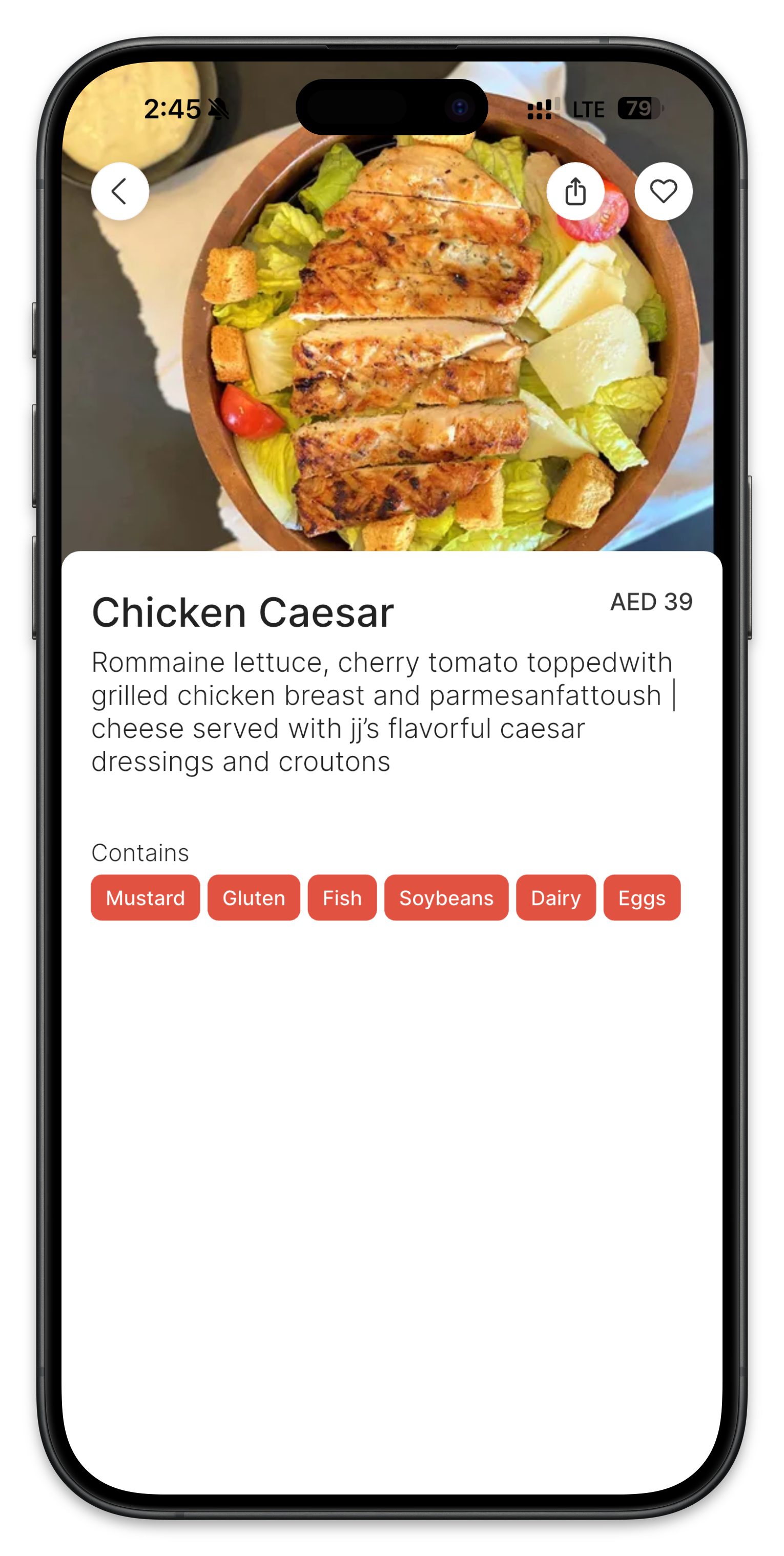
How Places Shows Allergen Info for Every Dish
Food allergies are not preferences. They are medical conditions that can turn an enjoyable meal into a medical emergency. Yet the restaurant industry has historically treated allergen information as an afterthought, something buried in fine print, available only upon request, or communicated through a game of telephone between your server and the kitchen.
Places UAE takes a fundamentally different approach. Allergen information is built into the core of the platform, available for every dish at participating restaurants, and integrated into every search and recommendation. Here is how it works and why it matters.
The Problem With Traditional Allergen Communication
Consider how allergen information typically flows at a restaurant. You tell your server about your allergy. Your server relays this to the kitchen, possibly through an intermediary. A chef who may be managing dozens of orders simultaneously checks whether a dish contains your allergen. The answer comes back through the same chain, possibly losing accuracy at each step.
This process has several failure points:
- Language barriers: Dubai's restaurant kitchens employ staff from dozens of countries. Your server may speak English fluently, but the line cook preparing your food may not fully understand the allergy communication.
- Knowledge gaps: Not every chef knows every ingredient in every dish, particularly in large kitchens with pre-prepared sauces and stocks. A server might confidently say a dish is nut-free without knowing that the house dressing contains walnut oil.
- Time pressure: During a busy service, the priority is speed. Detailed allergen enquiries can be treated as inconveniences rather than safety-critical communications.
- No permanent record: Verbal allergen assurances leave no trail. If something goes wrong, there is no documentation of what was communicated.
How Places UAE Structures Allergen Data
Dish-Level Tagging
Every dish listed on Places UAE can carry specific allergen tags. These are not vague "may contain" warnings but specific indicators for the 14 major allergen groups recognised internationally: gluten, crustaceans, eggs, fish, peanuts, soy, milk and lactose, tree nuts, celery, mustard, sesame, sulphites, lupin, and molluscs.
When you view a restaurant's menu on the app, these tags appear alongside each dish. At a glance, you can see which items are safe for your specific allergies and which to avoid. No conversation required, no reliance on a server's memory, no uncertainty.
Persistent Allergy Profiles
Rather than declaring your allergies every time you search, Places UAE lets you create a permanent allergy profile. Set it once, and the app automatically filters your experience. Menus highlight safe dishes and flag potential risks. Search results prioritise restaurants with more safe options. Recommendations take your allergies into account alongside your taste preferences.
This persistent approach means the app is always watching out for you, even when you forget to ask. Browse a new restaurant on a whim, and your allergen flags are still active, still protecting you.
AI-Aware Allergen Search
The app's search understands allergen-related queries in natural language. You ca search for "restaurants safe for tree nut allergy near Business Bay" or "gluten-free brunch with no cross-contamination risk in Dubai Marina" and receive results that account for your specific safety needs.
This is more powerful than simple filtering because the AI understands context. It knows that a query about nut allergies should exclude restaurants where nuts are a core ingredient in most dishes, even if a few nut-free options technically exist. It prioritises restaurants where your allergen is rare rather than pervasive, because that typically correlates with lower cross-contamination risk.
Where the Data Comes From
Accurate allergen data requires a multi-source approach. Places UAE compiles allergen information from several channels:
- Direct from restaurants: Partner restaurants provide their menu data including ingredient lists and allergen declarations. This is the primary and most authoritative source.
- Ingredient analysis: For dishes where ingredient lists are available, the platform can flag common allergens automatically based on known ingredient-allergen relationships.
- Community feedback: Users can report allergen concerns, corrections, or confirmations, adding a crowdsourced verification layer.
- Ongoing verification: Menus change, recipes evolve, and suppliers switch. The platform's data is treated as a living resource that requires regular updates rather than a one-time snapshot.
What Allergen Data Cannot Replace
It is important to be transparent about limitations. Digital allergen data is a powerful tool, but it is not a guarantee of safety. Menus change. Kitchens substitute ingredients. Cross-contamination can occur even at restaurants with excellent allergen protocols.
Places UAE presents allergen information as a decision-support tool, not an absolute safety guarantee. The platform encourages users to:
- Use the app's data to shortlist safe restaurants and identify suitable dishes.
- Confirm allergen status directly with restaurant staff when you arrive.
- Always carry appropriate medication (such as epinephrine auto-injectors for severe allergies).
This layered approach, combining digital data with personal verification, provides the strongest possible foundation for safe dining.
The Bigger Picture
Making allergen information accessible, searchable, and persistent is not just a feature. It is a statement about who restaurants should serve. People with food allergies deserve to participate fully in Dubai's extraordinary dining scene without anxiety, without lengthy interrogations of waitstaff, and without the nagging fear that a meal might make them ill.
By building allergen awareness into the infrastructure of restaurant discovery, Places UAE is helping to create a dining culture where safety information flows as naturally as a menu recommendation. That is good for allergy sufferers, good for restaurants, and good for a city that prides itself on welcoming everyone to the table.
Get Cashback at 190+ Dubai Restaurants
Pay your bill through the Places app and up to 50% comes back as cashback credit. No coupons, no vouchers. Free to download.